 Fly Tying Inventory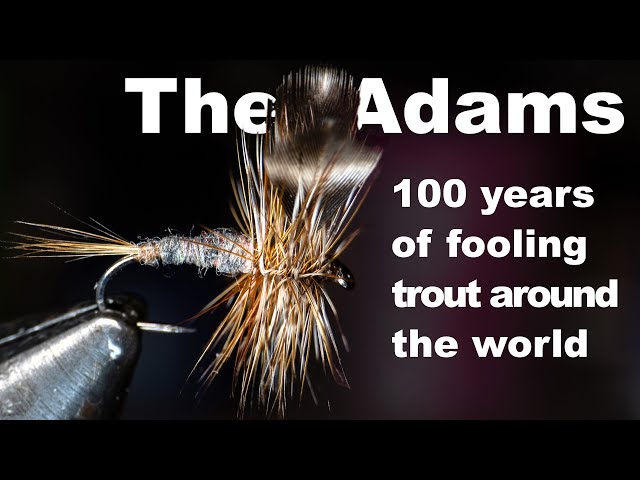
Adams
One of the most iconic and versatile dry flies ever created. Designed by Leonard Halladay in 1922 in Michigan at the request of his friend Charles Adams. The mixed grizzly and brown hackle with gray dubbing body creates a buggy silhouette that suggests a wide range of mayflies and other aquatic insects. Often considered the single most important dry fly pattern in a trout angler's box.
🪶 Ready to tie this?
This pattern needs 6 materials. Sign up free to check which ones you already own.
Materials
Standard dry fly hook (TMC 100, Daiichi 1180), sizes 10-20
Gray or black 8/0 (70 denier)
Mixed brown and grizzly hackle fibers
Gray muskrat fur dubbing or Superfine dry fly dubbing in Adams Gray
Grizzly hen hackle tips, upright and divided
One brown and one grizzly rooster hackle, wound together
How to Tie the Adams
- 1
Step 1
Mount hook in vise and start thread behind the eye, wrapping a smooth base rearward to the bend.
Leave space behind the eye for the hackle and head.
- 2
Step 2
Select matched grizzly hackle tips for the wing. Measure to shank length, tie in upright and divide with figure-eight wraps.
Use a small thread dam in front to keep wings upright.
- 3
Step 3
Tie in a mixed tail of brown and grizzly hackle fibers at the bend, approximately shank length.
Splay the tail fibers slightly for better balance on the water.
- 4
Step 4
Dub a slim, tapered body of gray muskrat or Superfine dubbing forward to just behind the wings.
Keep the dubbing thin — a sparse body floats better than a bulky one.
- 5
Step 5
Tie in one brown and one grizzly hackle feather behind the wing. Wind both forward through the thorax area, making turns behind and in front of the wing.
3-4 turns of each hackle gives the right density. Trim any fibers that obstruct the hook eye.
- 6
Step 6
Build a small thread head, whip finish, and apply head cement.
Watch Tying Tutorial
https://www.youtube.com/watch?v=KNHerqhvfaY
Credit: Leonard Halladay (1922), Mayfield, Michigan