 Fly Tying Inventory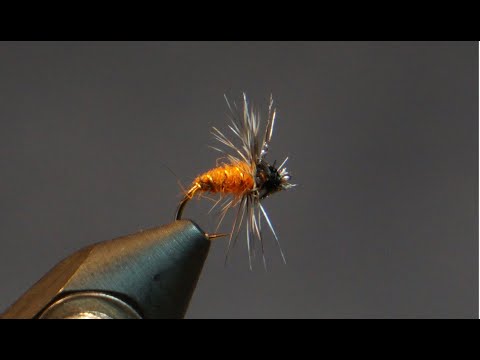
Breadcrust Nymph
A classic cased caddis larva imitation developed by Rudy Sentiwany in the 1940s, demonstrated by Tim Flagler for Midcurrent. The unique bugginess comes from a wrapped ruffed grouse quill that creates a realistic, mottled appearance. Best fished dead-drifted near the stream bottom.
🪶 Ready to tie this?
This pattern needs 7 materials. Sign up free to check which ones you already own.
Materials
Tiemco 3769 or similar nymph hook, sizes 10-16
Brown Veevus 14/0
Orange Superfine dubbing or yarn
Split ruffed grouse tail feather, softened by soaking
Brown hackle stem
Fine gold wire
Grizzly or partridge hackle, sparse (optional)
How to Tie the Breadcrust Nymph
- 1
Step 1
Prepare the ruffed grouse feather by soaking it in warm water until pliable, then split the quill down the center. Secure the hook in the vise and lay down a thread base.
- 2
Step 2
Tie in the fine gold wire (over-rib) and brown hackle stem (under-rib) at the hook bend.
- 3
Step 3
Dub a tapered underbody of orange Superfine dubbing from the bend to the thorax area.
The orange underbody peeks through the grouse quill wraps, adding a subtle warm undertone.
- 4
Step 4
Wrap the prepared, softened grouse quill forward over the dubbed body, creating the mottled 'breadcrust' appearance. Secure at the thorax.
- 5
Step 5
Counter-wrap the hackle stem, then the gold wire over the quill body for reinforcement and segmentation. Tie off both and trim.
- 6
Step 6
Optionally, tie in a sparse collar of grizzly or partridge hackle fibers at the thorax. Build a neat thread head, whip finish, and cement.
Watch Tying Tutorial
https://www.youtube.com/watch?v=p7ofsXUMrNI
Credit: Tim Flagler / Midcurrent