 Fly Tying Inventory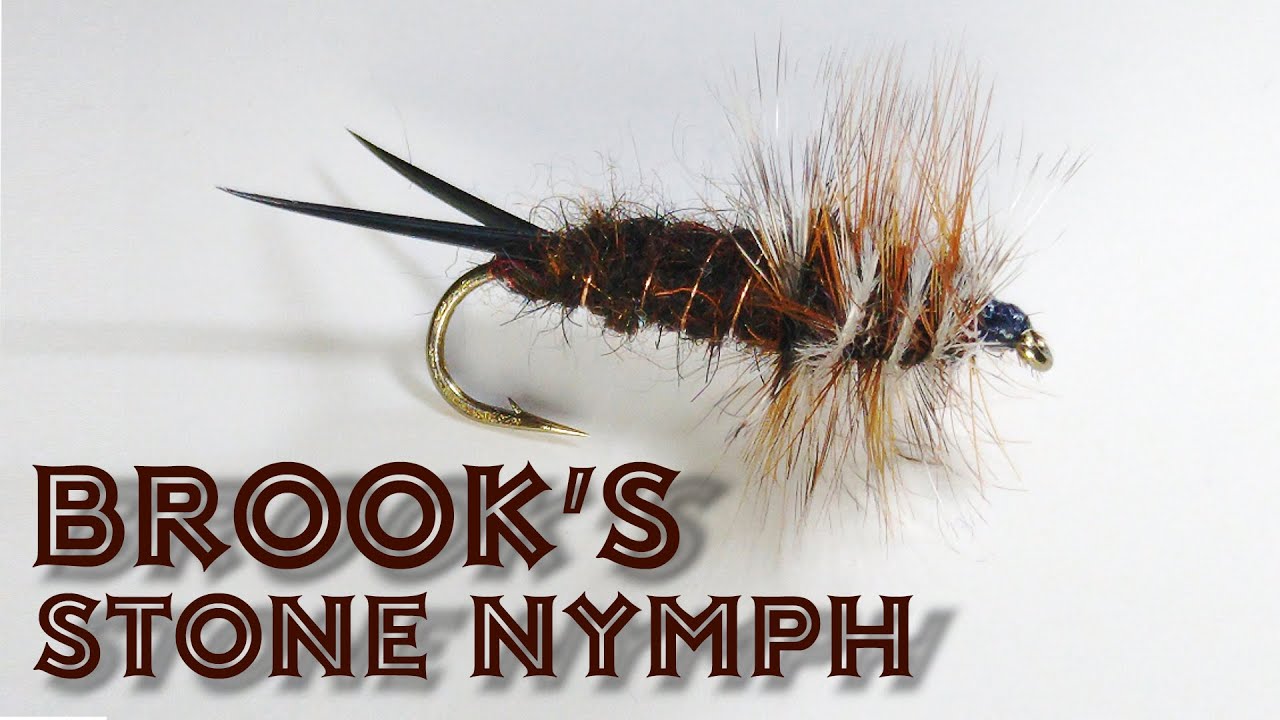
Brooks' Stone (Montana Stone)
Charles Brooks' famous stonefly nymph, designed to be tied 'in the round' with no distinct top or bottom—reflecting Brooks' belief that tumbling nymphs present all angles to trout. Features a yarn body, wire rib, ostrich herl gills, and hackle legs. A cornerstone pattern for Montana's legendary stonefly rivers.
🪶 Ready to tie this?
This pattern needs 9 materials. Sign up free to check which ones you already own.
Materials
3XL nymph hook (Mustad 9671 or Daiichi 2220), size 4-10
Lead or lead-free wire .020, heavy wraps along shank
Brown or black 6/0
Brown or amber goose biots, two per side, splayed
Fine gold or copper wire
Brown Uni-Yarn or hand-spun wool
Same yarn as abdomen (brown or sulphur orange for Golden Stone variant)
White or gray ostrich herl, tied at thorax
Grizzly and brown hackle, palmered over thorax 'in the round'
How to Tie the Brooks' Stone (Montana Stone)
- 1
Step 1
Wrap the hook shank heavily with lead wire for maximum weight. Secure the hook in the vise and start the thread over the lead.
- 2
Step 2
Tie in two brown goose biots at the bend, splayed outward at a 45-degree angle for the tail.
- 3
Step 3
Tie in fine gold wire for ribbing at the tail base.
- 4
Step 4
Tie in brown Uni-Yarn at the tail and wrap a tapered abdomen forward to the 60% mark. Rib with the wire in even spirals.
Brooks emphasized 'in the round' construction—the fly should look the same from every angle since tumbling nymphs present all sides to trout.
- 5
Step 5
At the thorax position, tie in a strand of white ostrich herl for gills.
- 6
Step 6
Tie in both a grizzly and brown hackle at the thorax.
- 7
Step 7
Continue building the thorax with yarn. Palmer both hackles over the thorax area.
- 8
Step 8
Wind the ostrich herl through the thorax hackle for the gill effect.
- 9
Step 9
Form a thread head, whip finish, and cement. Trim any stray hackle fibers on top and bottom to a uniform length.
Watch Tying Tutorial
https://www.youtube.com/watch?v=MJBtDap-Ynk
Credit: Charles E. Brooks