 Fly Tying Inventory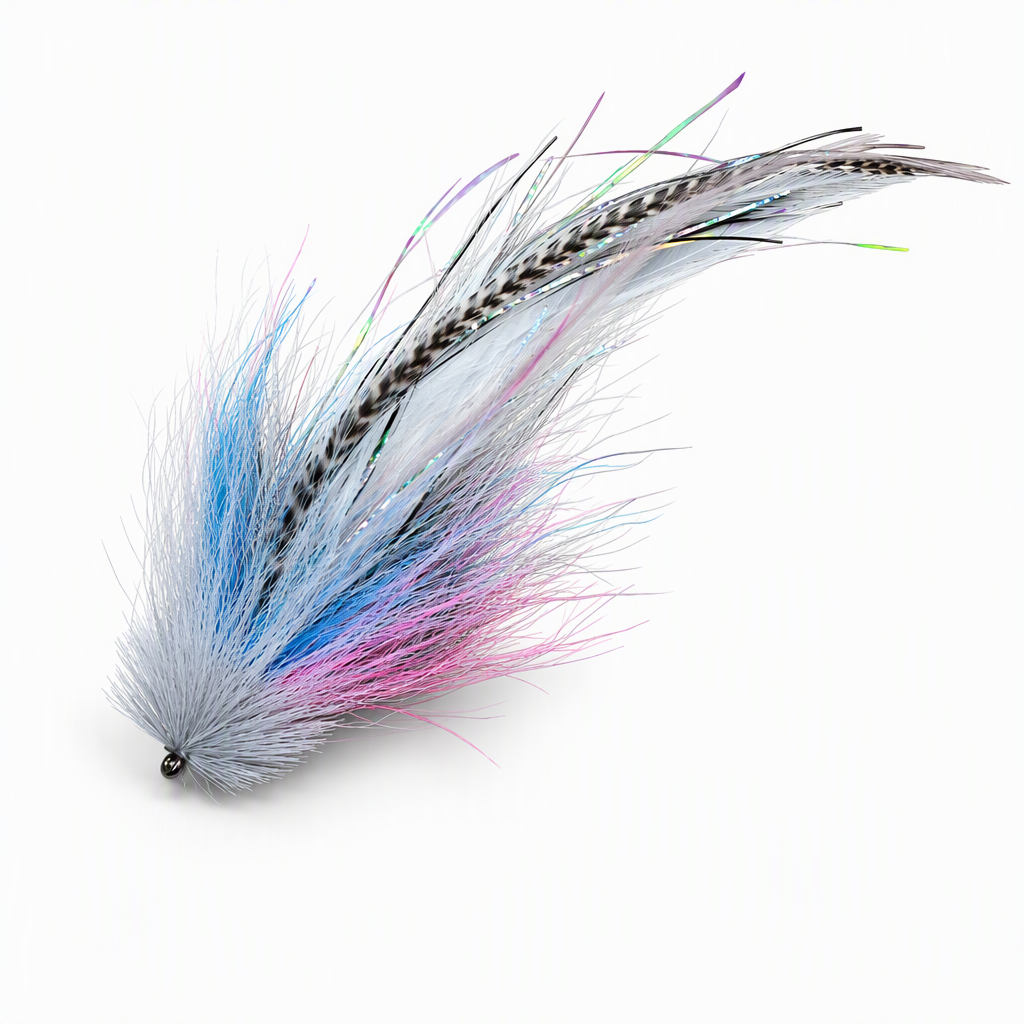
Buford
Brad Bohen's Buford is a big single-hook streamer made from little more than bucktail, long feathers and flash. Its layered fur, feather and flash construction is the template for many modern pike and musky flies. Long saddle or schlappen feathers trail behind a body of stacked bucktail clumps that ends in a dense bucktail head, so the fly pushes water, keeps a big profile and breathes on every pause. This cotton-candy version mixes white, grey, blue and pink, and is fished with long, erratic strips.
🪶 Ready to tie this?
This pattern needs 5 materials. Sign up free to check which ones you already own.
Materials
GSP thread, 100-150 denier
100-150 denier
Bucktail in white, grey, blue and pink, for the support clump, body clumps and head
White, Grey, Blue, Pink
Schlappen or long saddle feathers in white, grey and grizzly
White, Grey, Grizzly
How to Tie the Buford
- 1
Step 1
Mount the hook and start the GSP thread at the back of the shank, above the point.
- 2
Step 2
Tie a thin clump of white bucktail on top at the rear. It works as a support that holds the tail feathers up and away from the hook bend.
Stiff hair from near the tip of the bucktail makes the best support.
- 3
Step 3
Make the tail from two or three white, grey and grizzly feathers per side. Tie them in on each side of the support so they splay slightly; they should be several times the length of the hook.
- 4
Step 4
Add a few strands of moonlight Magnum Flashabou along each side, cut to uneven lengths a little shorter than the longest feathers.
- 5
Step 5
Move forward a short step and tie in a pencil-thick clump of grey or white bucktail around the shank, then a shorter pair of feathers. Clean the underfur out of each clump before tying it in.
- 6
Step 6
Keep working forward with clumps of pink and blue bucktail blended with the grey and white. Make each clump a little fuller than the last so the fly gets taller toward the front.
Keep the clumps modest; too much hair makes the fly heavy to cast and stops it breathing.
- 7
Step 7
Leave room behind the eye for the head. Cut a large clump of grey bucktail, clean and even it, and tie it in all around the shank just behind the eye so it sweeps back into a dense collar and head.
Many tyers reverse-tie this clump, pointing the tips forward and then folding them back over a thread dam, for a fuller and tougher head.
- 8
Step 8
Build a neat thread head, whip finish, and seal the wraps with glue or head cement.
Watch Tying Tutorial
https://www.youtube.com/watch?v=b7pmFz8g21Q
Credit: Paul Monaghan