 Fly Tying Inventory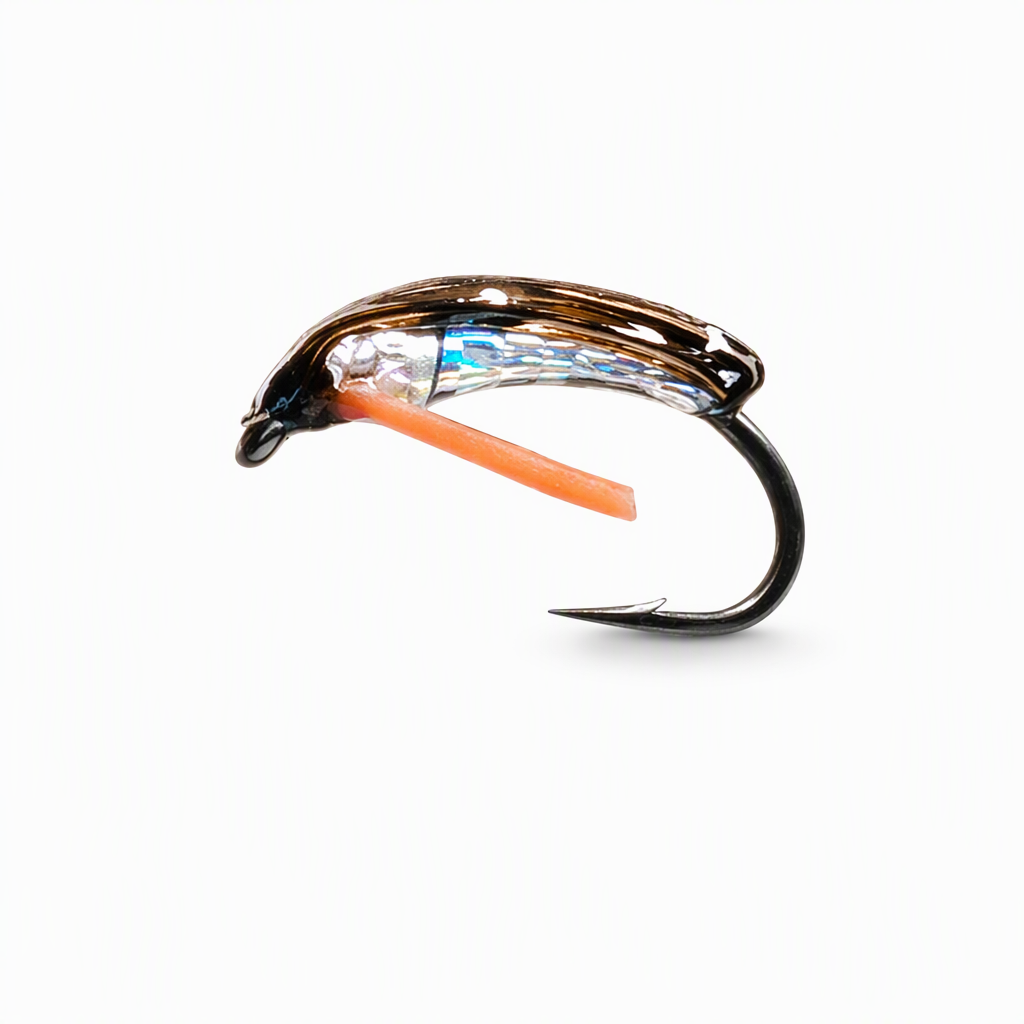
Corixa
A simple imitation of the corixa or water boatman, a small swimming bug of weedy lake margins that carries a silvery bubble of air on its underside. A silver holographic body suggests that air bubble, a pheasant tail shellback gives the brown back and a pair of light orange stretchy paddles kick on the retrieve. Tim Joyce fishes it around weed beds in late summer, when trout hunt the shallows for boatmen; short, sharp pulls on a floating or intermediate line copy the natural's darting swim.
🪶 Ready to tie this?
This pattern needs 5 materials. Sign up free to check which ones you already own.
Materials
Kamasan B110 grubber hook, size 12
12
Silver holographic mylar tinsel
Silver
Pheasant tail fibres pulled over the back as a shellback
Natural brown
Flexi floss (stretch floss), light orange, one strand each side as paddles
Light orange
How to Tie the Corixa
- 1
Step 1
Mount the grubber hook and run a layer of black thread from behind the eye back to the start of the bend.
- 2
Step 2
Tie in a slip of pheasant tail fibres at the rear of the shank, with the loose ends pointing back over the bend; these will become the shellback.
- 3
Step 3
Tie in the silver holographic mylar at the same point, then bring the thread forward to just behind the eye.
A few extra thread wraps along the middle of the shank before you wind the mylar give the body the boatman's plump, oval outline.
- 4
Step 4
Wind the mylar forward in touching turns over the underbody so no thread shows. Tie it off a little short of the eye and trim the waste.
- 5
Step 5
Pull the pheasant tail fibres forward over the top of the body, keeping them flat and centred, and bind them down behind the eye.
- 6
Step 6
Lay a length of light orange flexi floss across the shank just behind the eye and lock it in with crossing figure-of-eight wraps, so one strand sticks out on each side as a paddle.
Trim the paddles to roughly the length of the body; too long and they tangle around the bend.
- 7
Step 7
Trim the pheasant tail butts, build a small thread head, whip finish and varnish the head.
A thin coat of varnish along the shellback makes the pheasant tail far more durable.
Watch Tying Tutorial
https://www.youtube.com/watch?v=nUgeCZIsBSU
Credit: Tim Joyce Flyfishing-Essex