 Fly Tying Inventory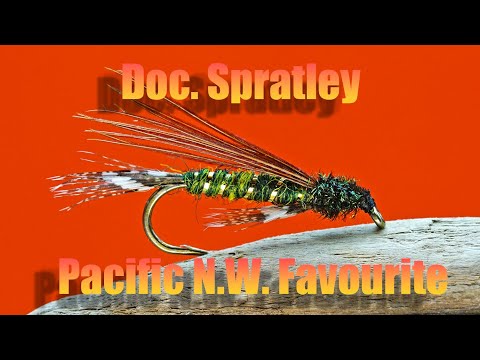
Doc Spratley
The Doc Spratley is a legendary Pacific Northwest lake pattern that imitates a wide range of aquatic insects including caddis pupae, chironomids, and dragonfly nymphs. Its black wool body, grizzly hackle, pheasant tail wing, and distinctive peacock herl head create an incredibly versatile profile. A must-have for stillwater fly fishers throughout BC and Washington.
🪶 Ready to tie this?
This pattern needs 8 materials. Sign up free to check which ones you already own.
Materials
2XL or 3XL wet fly hook, sizes 6-14 (Mustad 9672 or similar)
Black 6/0 or 8/0
Grizzly hackle fibers, sparse
Silver or gold oval tinsel, medium
Black wool, chenille, or dubbing
Grizzly hackle, collar or beard style
Ringneck pheasant tail fibers, bunched
Peacock herl, 2-3 strands wrapped
How to Tie the Doc Spratley
- 1
Step 1
Secure the hook in the vise and start black thread behind the eye. Wrap back to the bend.
- 2
Step 2
Tie in a sparse bunch of grizzly hackle fibers for the tail, slightly less than hook-shank length.
- 3
Step 3
Tie in oval silver tinsel for ribbing at the tail. Then tie in black wool or chenille and wrap forward to form a smooth body, stopping about two eye-lengths behind the hook eye. Secure and trim.
- 4
Step 4
Wind the silver tinsel forward in 4-6 open, evenly spaced turns. Tie off and trim.
- 5
Step 5
Tie in a small bunch of grizzly hackle fibers as a beard/throat under the hook, reaching just past the hook point. Alternatively, tie in a grizzly hackle and make 2-3 wraps as a collar, sweeping fibers back.
A beard-style throat gives a cleaner profile for stillwater retrieves, while a full collar adds more movement.
- 6
Step 6
Take a small bunch of ringneck pheasant tail fibers. Align the tips, measure to the end of the tail, and tie in on top as the wing.
- 7
Step 7
Tie in 2-3 strands of peacock herl by the tips. Wrap a neat, prominent head with the herl. Tie off securely and whip finish.
- 8
Step 8
Apply head cement to the thread wraps beneath the peacock herl head for durability.
Watch Tying Tutorial
https://www.youtube.com/watch?v=taKdk1wPGyc
Credit: Dick Prankard (attributed to Dr. Spratley)