 Fly Tying Inventory
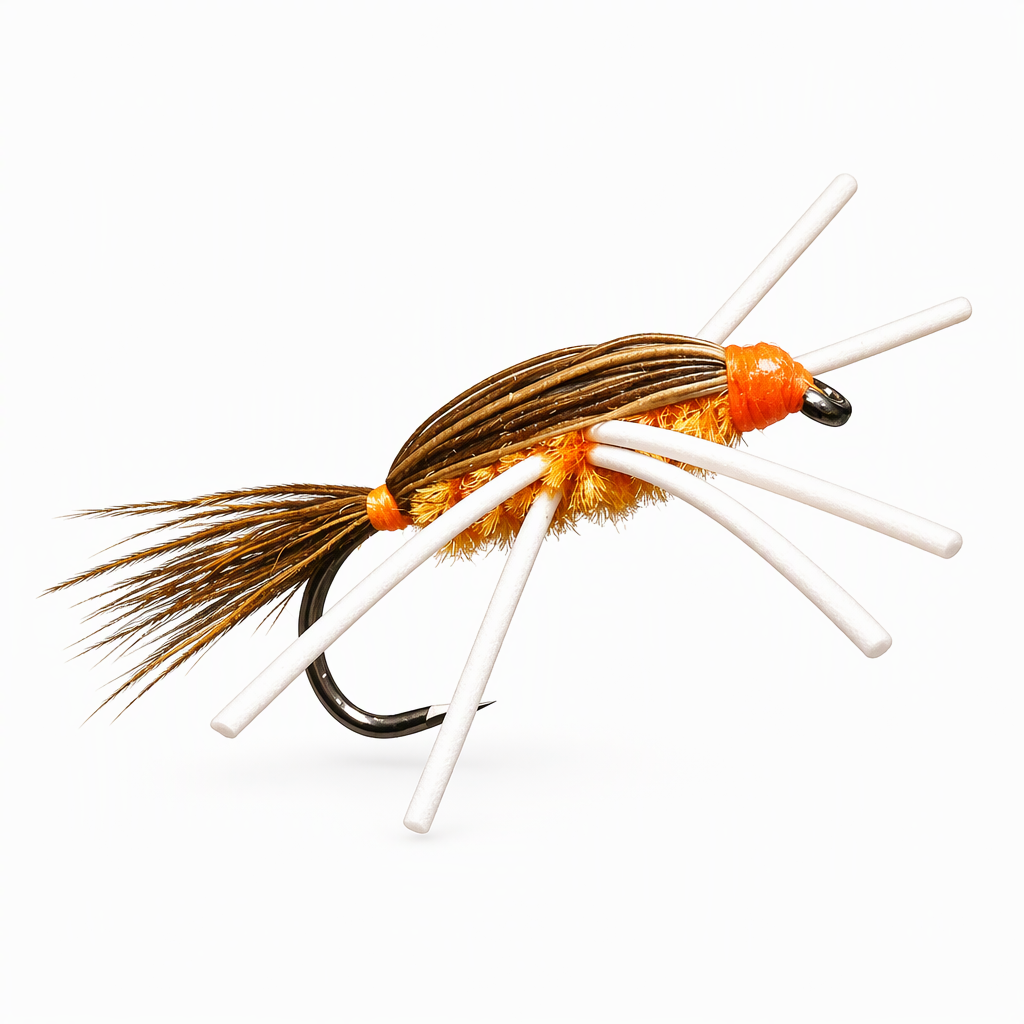
Gill Getter
Florida angler and tyer Tom Lentz created the Gill Getter as one of his three go-to bluegill flies. It uses just three materials besides the thread: moose mane for the tail and wing case, a chenille body and two strands of rubber legs on each side. It can be fished as a semi-dry fly or as a slowly sinking nymph, and it takes panfish in many kinds of water. Tie it on a 1X long hook in sizes 8 to 14. Tied here with orange chenille and white legs.
Ready to tie this?
This pattern needs 5 materials. Sign up free to check which ones you already own.
Materials
1X long hook, sizes 8 to 14
8-14
Tying thread to match the body (orange here)
Orange
Moose mane, for the tail and the wing case
Chenille, orange
Orange
Rubber legs, white, two strands on each side
White
How to Tie the Gill Getter
- 1
Step 1
Mount the hook in the vise, start the thread and wrap a base back to the bend.
- 2
Step 2
Tie in a bunch of moose mane at the bend with the tips extending back past the bend for the tail. Do not trim the butts: fold them back over the tail and bind them so they also point to the rear. They will be pulled forward later for the wing case.
- 3
Step 3
Tie in the chenille at the bend and wrap it forward to about the middle of the shank. Tie it off there but do not trim it.
- 4
Step 4
Tie in two strands of rubber leg on each side of the hook at the middle of the body.
- 5
Step 5
Wrap the chenille on forward, working around the legs, to just behind the eye. Tie it off and trim.
- 6
Step 6
Pull the moose mane forward over the top of the body to form the wing case and tie it down behind the eye. Trim the excess hair.
- 7
Step 7
Build a small head, whip finish and trim the thread.
- 8
Step 8
Cut the legs apart if they are looped, and trim them to length.
Watch Tying Tutorial
https://www.youtube.com/watch?v=CsV4OIGS6ss
Credit: Savage Flies