 Fly Tying Inventory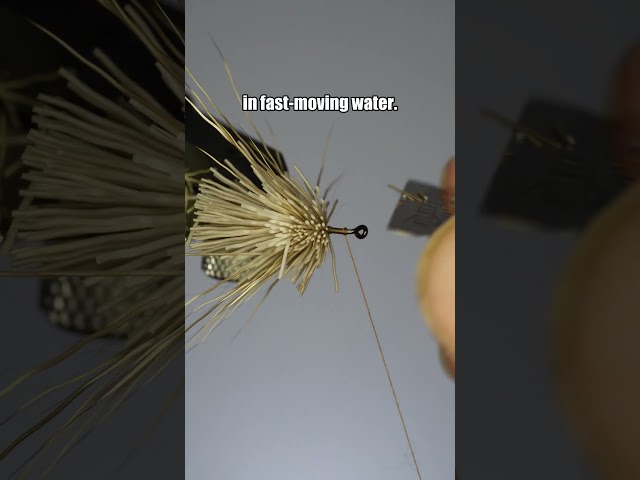
Goddard Caddis
A legendary caddis dry fly designed by John Goddard and Cliff Henry (originally called the G&H Sedge) in the 1960s in the UK. The fly features a body made entirely of spun and clipped deer hair, creating an incredibly buoyant and unsinkable fly. The trimmed deer hair forms a tent-shaped profile that perfectly imitates an adult caddisfly. Excellent for skating across riffles and runs to trigger aggressive rises during caddis hatches.
🪶 Ready to tie this?
This pattern needs 5 materials. Sign up free to check which ones you already own.
Materials
Standard dry fly hook (TMC 100, Dai-Riki 305), sizes 12-18
Brown or tan 6/0 (140 denier)
Natural deer body hair, spun and clipped to tent/wedge shape
Brown dry fly hackle
Stripped brown hackle stems, splayed forward
How to Tie the Goddard Caddis
- 1
Step 1
Mount hook and start thread at the bend.
- 2
Step 2
Cut a clump of deer body hair. Remove underfur and even tips in a stacker. Spin the hair onto the shank by letting thread torque flare the hair around the hook.
Deer hair spinning is the key skill here — let the thread spin the hair, don't force it.
- 3
Step 3
Pack the spun deer hair tightly toward the bend. Repeat spinning and packing 3-5 times until the shank is covered to behind the eye.
- 4
Step 4
Whip finish the thread and remove the fly from the vise.
- 5
Step 5
Using sharp scissors or a razor blade, trim the deer hair to a tent or wedge shape — flat on the bottom, rounded on top, and tapered at the rear.
Leave the bottom flat so the fly rides flush on the water surface. Trim carefully for symmetry.
- 6
Step 6
Remount the fly. Tie in brown hackle at the head and make 3-4 turns to form a collar.
- 7
Step 7
Tie in two stripped hackle stems as antennae, splayed forward. Whip finish and apply head cement.
Watch Tying Tutorial
https://www.youtube.com/watch?v=bmxvQ0XFENs
Credit: John Goddard and Cliff Henry (1960s), originally 'G&H Sedge'