 Fly Tying Inventory
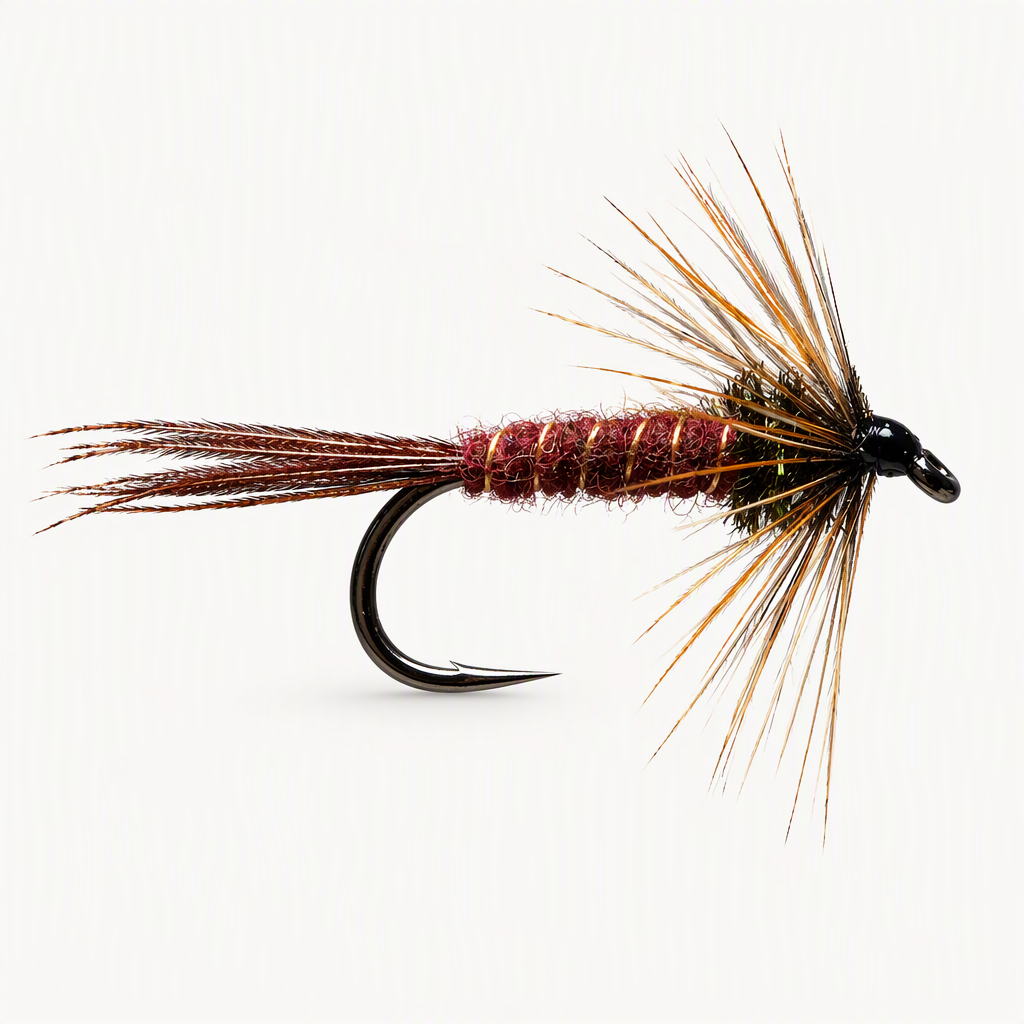
Isonychia Nymph
Preston Jennings, author of A Book of Trout Flies (1935), designed this slim nymph to imitate the Isonychia or slate drake, a dark, strong-swimming mayfly of eastern freestone rivers. A claret-brown dubbed abdomen with a gold wire rib, a peacock herl thorax and a soft barred ginger collar give it the dark, reddish look of the natural. Dead-drift it through riffles and pocket water, or swing and strip it like a wet fly to mimic nymphs swimming toward the banks to hatch from late spring into fall.
Ready to tie this?
This pattern needs 7 materials. Sign up free to check which ones you already own.
Materials
8/0 (70-denier) thread, black
Black · 8/0
Pheasant tail fibres, chocolate brown (6-8 fibres)
Chocolate Brown
UTC Ultra Wire, gold, brassie
Gold · Brassie
Spirit River UV2 Fine & Dry dubbing, Isonychia
Isonychia
Peacock herl
Rooster hackle, barred ginger variant
Barred Ginger Variant
How to Tie the Isonychia Nymph
- 1
Step 1
Start the black thread behind the eye and lay a thread base back to the bend.
- 2
Step 2
Tie in six to eight chocolate pheasant-tail fibres at the bend as a tail roughly half a shank long, and bind the butts along the shank.
- 3
Step 3
Tie in the gold wire at the bend, then return the thread to the bend.
- 4
Step 4
Dub a slim, gently tapered abdomen of Isonychia Fine & Dry over the rear two-thirds of the shank.
- 5
Step 5
Rib the abdomen with evenly spaced turns of gold wire, tie it off and break off the excess.
- 6
Step 6
Tie in a few peacock herls by their tips and wrap them forward to form a full thorax, stopping a little behind the eye. Tie off and trim.
Twisting the herls around the thread before wrapping keeps the thorax from being cut by trout teeth.
- 7
Step 7
Size a barred ginger variant hackle so its fibres reach about the hook point, strip the fluff from the base and tie it in ahead of the thorax.
- 8
Step 8
Wrap two or three turns of hackle as a soft collar, tie it off and trim the tip. Stroke the fibres back, build a small head and whip finish.
Watch Tying Tutorial
https://www.youtube.com/watch?v=GEw6LsZbEGg
Credit: Tim Flagler / Tightline Productions