 Fly Tying Inventory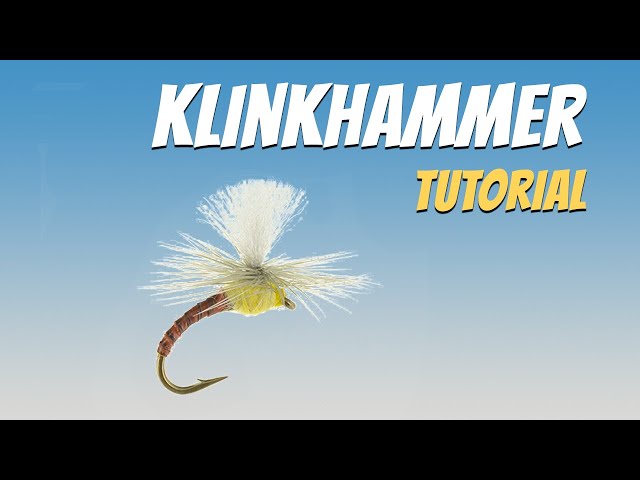
Klinkhamer Emerger
Hans van Klinken's Klinkhamer Special, developed in the early 1980s in Norway, is one of the world's most successful emerger patterns. Its unique design features a curved-shank hook that hangs the abdomen below the surface while a parachute hackle and wing post support the thorax in the film. This perfectly mimics a caddisfly or mayfly struggling to emerge — a stage that triggers aggressive feeding from trout and grayling.
🪶 Ready to tie this?
This pattern needs 7 materials. Sign up free to check which ones you already own.
Materials
Curved shank emerger hook (Daiichi 1167, Partridge Klinkhamer, or similar), sizes 10-18
Black, tan, or olive 6/0 to 8/0
Tan, olive, brown, or black Superfine dubbing or peacock herl
Peacock herl or darker dubbing
White poly yarn, calf body hair, or foam (for visibility and to support hackle)
Grizzle, blue dun, or brown cock hackle, wrapped parachute style
Sparse Z-Lon, Antron, or guard hairs for trailing shuck
How to Tie the Klinkhamer Emerger
- 1
Step 1
Place the curved-shank hook in the vise and secure thread near the hook bend, laying a foundation halfway up the shank.
- 2
Step 2
Attach a small bunch of white poly yarn or calf hair upright at the hook's midpoint as the parachute post.
- 3
Step 3
Secure the hackle feather against the base of the wing post, with the hackle pointing upwards.
- 4
Step 4
Dub the abdomen material (Superfine or peacock herl) down and around the curve of the hook, forming a slender tapered abdomen that will hang below the surface.
The abdomen hanging below the surface is the 'trigger' — this is what makes the Klinkhamer so deadly.
- 5
Step 5
Optionally tie in a small bunch of Z-Lon or Antron trailing fibers at the hook bend as a shuck.
- 6
Step 6
Dub peacock herl or darker dubbing for the thorax, forming a thicker area just ahead of the abdomen.
- 7
Step 7
Wind the hackle horizontally around the upright post in parachute style (3-5 turns), allowing hackle fibers to protrude outward for surface support.
- 8
Step 8
Whip finish behind the hook eye, securing the hackle and post. Trim the post to a visible but non-intrusive length.
- 9
Step 9
Optionally apply a drop of head cement for durability.
Vary body and hackle color to match local hatches. Blue dun hackle was Hans van Klinken's original preference.
Watch Tying Tutorial
https://www.youtube.com/watch?v=qlcK1GtEp04
Credit: Hans van Klinken