 Fly Tying Inventory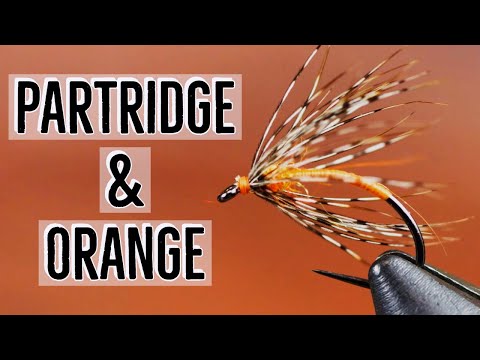
Partridge and Orange
One of the oldest and simplest fly patterns still in regular use, dating back centuries in the English tradition. The Partridge and Orange is a deadly soft-hackle wet fly that imitates emerging caddis and mayflies, making it effective across all trout waters.
🪶 Ready to tie this?
This pattern needs 5 materials. Sign up free to check which ones you already own.
Materials
Standard wet fly hook, size 12-16 (e.g., Tiemco 3769)
Orange 8/0 or 6/0 (Uni-Thread or Veevus)
Orange silk thread or orange Pearsall's silk floss
Hungarian partridge body feather, brown mottled
Clear head cement or UV resin
How to Tie the Partridge and Orange
- 1
Step 1
Mount hook in vise and start orange thread behind the eye. Wrap a smooth thread base to the bend of the hook.
The thread itself forms the body, so keep wraps neat.
- 2
Step 2
Build the body by wrapping the orange thread forward in smooth, touching turns from the bend to about two eye-widths behind the eye.
A slim, tapered body is key—avoid bulk.
- 3
Step 3
Select a well-marked Hungarian partridge feather. Strip the fluffy fibers from the base, leaving the barbed section.
Choose a feather sized to the hook—barbs should reach the hook point.
- 4
Step 4
Tie in the partridge feather by the tip, with the cupped side facing forward. Stroke the fibers back.
Tying by the tip gives more control over hackle density.
- 5
Step 5
Wrap the partridge feather 1.5 to 2 turns maximum. Tie off and trim the stem.
Sparse is key—soft hackle flies should be sparsely dressed.
- 6
Step 6
Stroke the hackle fibers rearward and make a few thread wraps to sweep them back. Build a small thread head, whip finish, and apply head cement.
The hackle fibers should sweep back gracefully toward the bend.
Watch Tying Tutorial
https://www.youtube.com/watch?v=kYrmEIo222s
Credit: Traditional English