 Fly Tying Inventory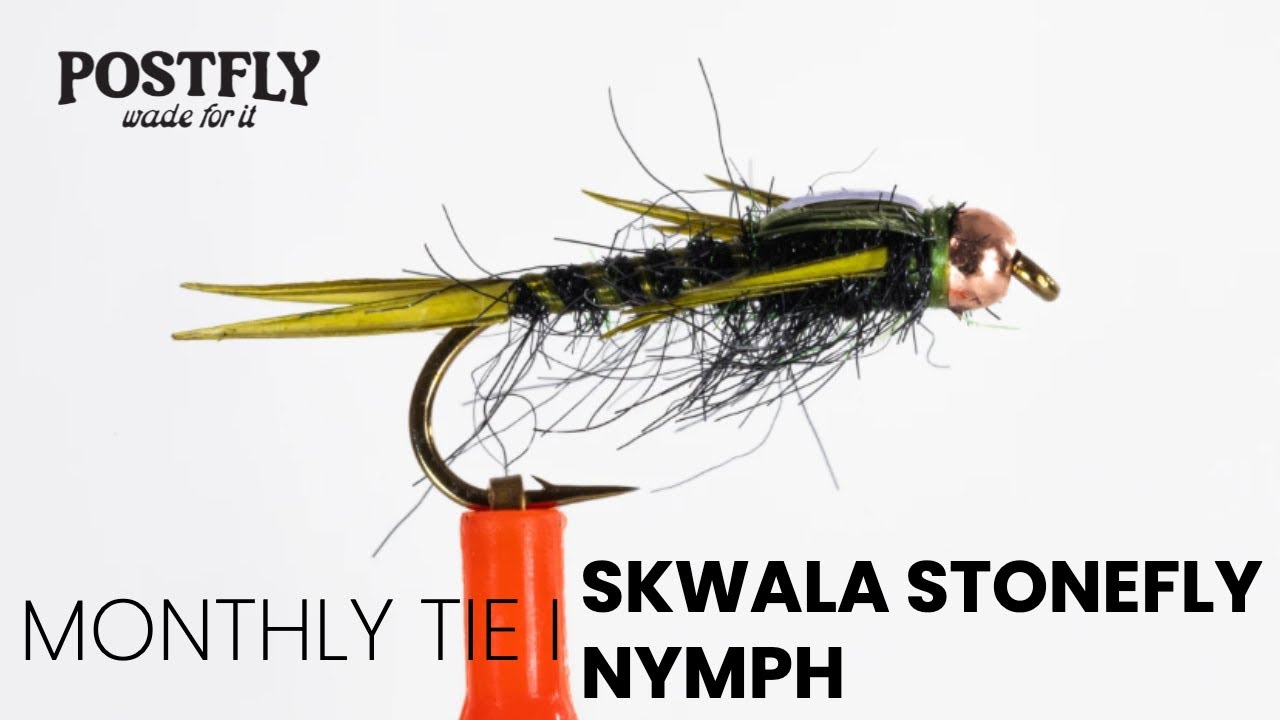
Skwala Stonefly Nymph
Imitates the early-season Skwala stonefly nymph (Skwala americana), one of the first large stoneflies to emerge in late winter and early spring. Olive-brown coloring with rubber legs and a pheasant tail wingcase. A critical pattern for early-season western rivers like the Bitterroot and Clark Fork.
🪶 Ready to tie this?
This pattern needs 9 materials. Sign up free to check which ones you already own.
Materials
2XL or 3XL nymph hook (TMC 5262 or Daiichi 1260), size 8-12
Black or dark olive tungsten bead, sized to hook
Olive 6/0 or 70 denier (Veevus or UTC)
Dark olive or brown goose biots, two, splayed
Olive or brown-olive dubbing (Superfine or Hare's Ear blend)
Pheasant tail fibers or turkey feather, coated with UV resin
Darker olive-brown dubbing with slight gold or tan blend
Black or olive rubber legs (Life-Flex or silicone), tied at thorax sides
How to Tie the Skwala Stonefly Nymph
- 1
Step 1
Slide the bead onto the hook if using. Secure the hook and start olive thread, wrapping a base back to the bend.
- 2
Step 2
Tie in two dark olive goose biots at the bend, splayed. Optionally add a tiny ball of black dubbing at the very base for an egg sac imitation.
The egg sac is a signature feature of female Skwala nymphs and can trigger extra strikes.
- 3
Step 3
Tie in the ribbing material (V-Rib or wire) at the tail base.
- 4
Step 4
Dub an even olive-brown abdomen forward to the 60% mark on the shank.
- 5
Step 5
Counter-wrap the rib forward over the body for segmentation. Tie off.
- 6
Step 6
Tie in pheasant tail fibers for the wingcase at the front of the abdomen.
- 7
Step 7
Tie in rubber legs on each side of the thorax. Dub a slightly bulkier thorax with darker olive dubbing.
- 8
Step 8
Pull the wingcase forward over the thorax and tie down behind the bead. Apply UV resin over the wingcase.
- 9
Step 9
Whip finish and cement the head.
Watch Tying Tutorial
https://www.youtube.com/watch?v=CecGzkM7cBI
Credit: Traditional / Bill's Skwala variant