 Fly Tying Inventory
Toothless Dragon Slider
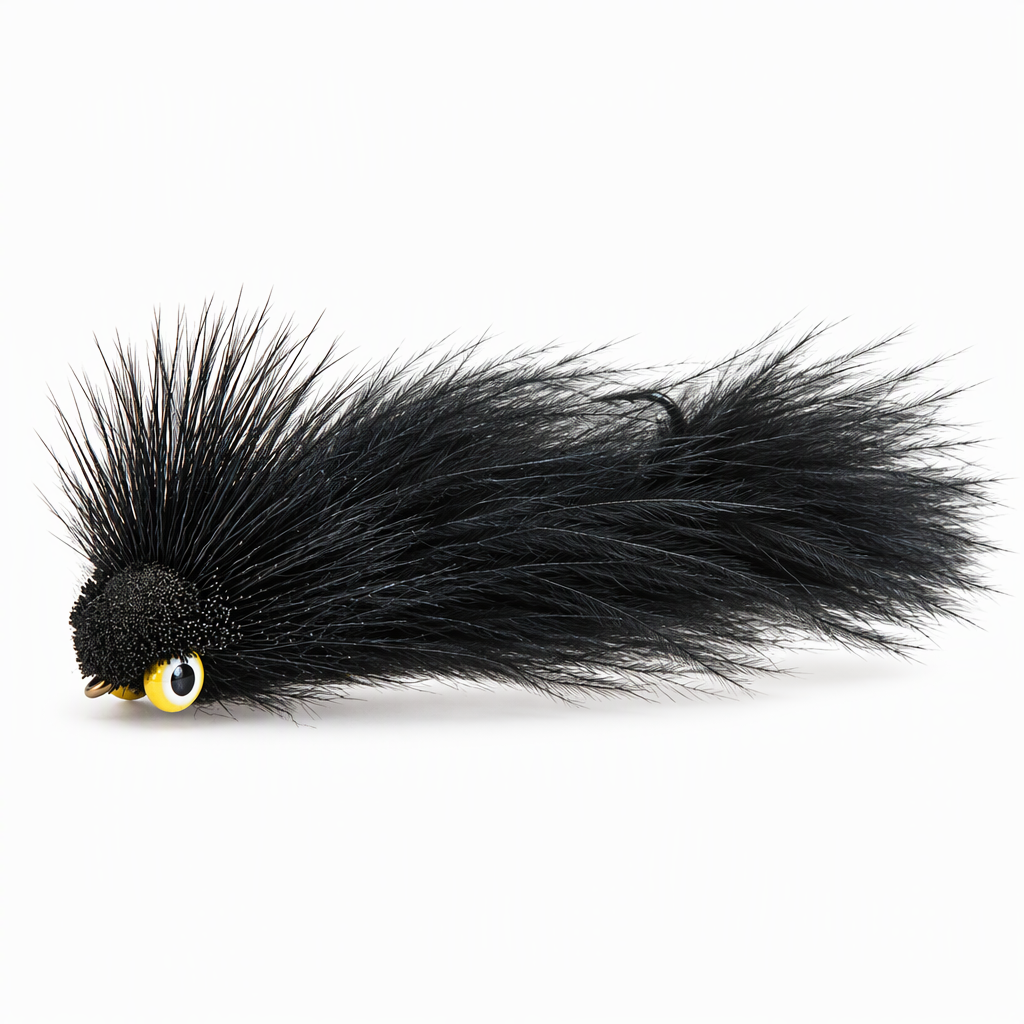
An all-black articulated slider from Cheech of Fly Fish Food, named by his daughter after the dragon in How to Train Your Dragon. Stacked marabou and plain chenille give it a soft body with very little flash, and a flat deer hair wedge, tied on one side of the shank only, makes the fly wobble on the strip. It was first fished for picky brook trout in Argentina. Fish it as a dark articulated trout streamer and change colors and head shapes to suit your water. Tied here on size 2 and 4 hooks.
Ready to tie this?
This pattern needs 11 materials. Sign up free to check which ones you already own.
Materials
Daiichi 2461 long shank streamer hook, size 4, rear hook
4
Danville Flat Waxed Nylon Thread, 140 denier, black
Black · 140 denier
Double Pupil Lead Eyes, large, black with yellow and black pupils
Black with yellow and black · Large
Senyo Intruder Trailer Hook Wire, black, regular, for the connection between hooks
Black · Regular
Nature's Spirit Deer Belly Hair, black
Black
How to Tie the Toothless Dragon Slider
- 1
Step 1
Mount the size 4 rear hook, start the black thread and lay a base back to the bend.
- 2
Step 2
Tie in a bunch of black strung marabou at the bend for a full tail that runs well past the hook. Bind the butts down and trim any excess.
- 3
Step 3
Tie in the black chenille and wrap a short section forward, then tie it off.
- 4
Step 4
Stack another bunch of marabou in front of the chenille, then repeat chenille and marabou up to the eye. Whip finish and cut the thread.
- 5
Step 5
Mount the size 2 front hook and start the thread. Bind the lead eyes to the top of the shank close to the eye of the hook.
The eyes tip the fly over so it rides hook point up, which sets which side of the shank gets the deer hair later.
- 6
Step 6
Run the wire through the eye of the rear hook, slide a black articulation bead onto both legs and bind the legs along the front shank. Check that the rear section swings freely.
- 7
Step 7
Tie in a bunch of marabou at the rear of the front shank so it covers the connection, then stack chenille and marabou forward as on the rear section, stopping short of the lead eyes.
- 8
Step 8
Add a small beard of black Bruiser Blend behind the lead eyes, then whip finish and cut the black thread.
- 9
Step 9
Turn the fly hook point up and start the white GSP thread behind the lead eyes. GSP lets you pull hard enough to pack deer hair tightly.
- 10
Step 10
Cut a bunch of black deer belly hair, comb out the underfur and even the tips in a stacker.
- 11
Step 11
Tie the bunch onto the top of the shank only, in the hook point up position, so it flares across that one side and leaves the opposite side bare.
- 12
Step 12
Comb, stack and tie in more bunches the same way, working forward past the lead eyes toward the hook eye and packing each one tightly against the last. Whip finish and cut the thread.
- 13
Step 13
Trim the hair with scissors, then shave it down with a razor blade to a thin, flat wedge. Leave it wide across the top and keep it flat through the face.
The flat face is what produces the wobble, so play with the shape until it swims the way you like.
Watch Tying Tutorial
https://www.youtube.com/watch?v=dFyY2HDvDJg
Credit: Cheech / Fly Fish Food